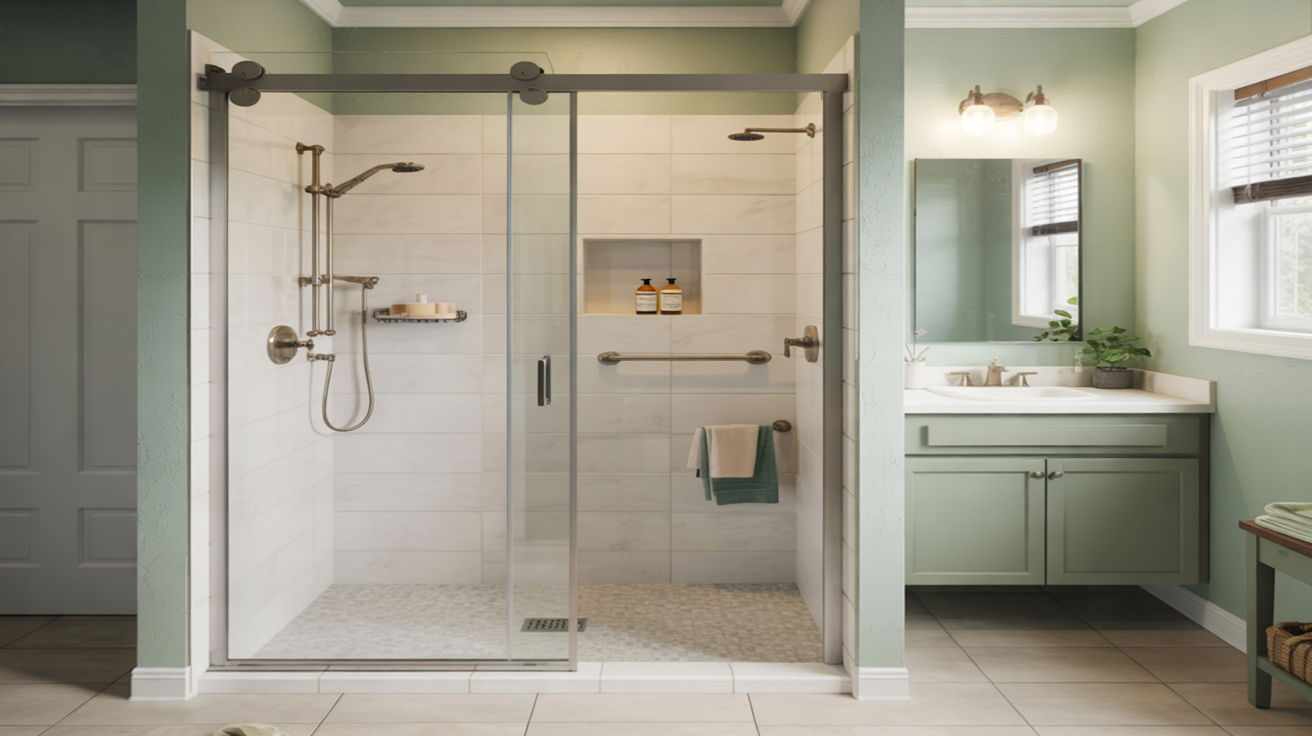
Choosing a new shower is about more than looks. The right replacement shower should fit your space, support your daily routine, and work with your budget and long-term plans for your Palm Bay home. This page walks through the most common types of replacement showers, when each one makes sense, and how to compare your options.
Main Types of Replacement Showers
Most shower remodels in Palm Bay fall into a few main categories. Understanding the basics of each can help you quickly narrow down what will work best in your bathroom.
1. Walk-In Showers
Walk-in showers are open, step-in showers without a full bathtub wall to climb over. They can be compact for small bathrooms or oversized with benches and multiple shower heads.
Best for: Homeowners who want a modern look, easier cleaning, and better accessibility.
- Pros: Easy entry, more elbow room, works well with glass doors, ideal for custom tile or acrylic walls.
- Cons: No soaking option like a tub, may require more waterproofing and planning than a basic tub/shower combo.
If you’re interested in design options, see Walk-In Shower Replacement: Design and Installation and Custom Shower Designs: Doors, Walls, and Bases.
2. Tub-to-Shower Conversions
A tub-to-shower conversion replaces an existing bathtub with a full-size shower. The new shower usually sits in the same footprint as the old tub.
Best for: Homeowners who never use the tub and want safer, more convenient daily showers.
- Pros: Improves accessibility, opens up visual space, often increases usable floor area.
- Cons: Removing the only bathtub in a home can matter for resale to families with small children.
To compare this option with a full shower remodel, visit Tub-to-Shower Conversion vs Full Shower Replacement.
3. Low-Threshold and Barrier-Free Showers
Low-threshold showers have a very small step (often 2–3 inches), while barrier-free showers are level with the bathroom floor for roll-in or walk-in access.
Best for: Aging in place, mobility challenges, or planning ahead for long-term accessibility.
- Pros: Safer entry, easier wheelchair or walker access, compatible with grab bars and benches.
- Cons: Requires careful design and waterproofing to prevent leaks.
Learn more in Low-Threshold and Barrier-Free Showers for Accessibility and Shower Replacement for Aging in Place.
4. Alcove Showers
Alcove showers fit into a three-wall recess, often replacing a traditional tub/shower combo along a single wall of the bathroom.
Best for: Standard-sized bathrooms and hall baths where space is limited.
- Pros: Efficient use of space, typically more budget-friendly, many size and material options.
- Cons: Less dramatic than a large custom or corner shower; design is somewhat defined by existing walls.
5. Corner Showers and Neo-Angle Showers
Corner showers tuck into a corner to save floor space. Neo-angle showers have an angled front to make the most of tight layouts.
Best for: Small bathrooms, guest baths, or adding a second shower where space is limited.
- Pros: Space-saving, visually open when paired with glass doors, good for awkward layouts.
- Cons: Smaller interior; may not be ideal for people who prefer more elbow room or built-in seating.
For more small-space ideas, see Small Bathroom Shower Replacement Ideas.
Material and Style Choices for Replacement Showers
Once you know the basic type of shower, the next choice is materials and finishes. These decisions affect maintenance, durability, and overall style.
Acrylic and Solid-Surface Systems
These are molded walls and bases designed for quick installation and low-maintenance performance.
- Benefits: Fewer seams, easier to clean, many color and pattern options, often used in one-day replacements.
- Considerations: Less customizable than fully tiled showers but can still look high-end with the right design.
Tile Showers
Tile showers use a custom-built, waterproofed base and tiled walls. They allow nearly unlimited design patterns and colors.
- Benefits: Highly customizable, classic look, can add value in many markets.
- Considerations: More grout lines to clean, requires skilled waterproofing and installation to prevent leaks.
For a detailed comparison of these options, visit Acrylic vs Tile Showers: Which Is Best for Your Bathroom?.
Doors vs Curtains
Your enclosure choice can change how the shower feels and functions.
- Glass doors: Frameless or semi-frameless doors keep water in, show off tile or walls, and make the space feel larger.
- Shower curtains: Budget-friendly, easy to change, and practical for families with small children.
See Choosing Shower Doors vs Shower Curtains After a Replacement for more pros and cons.
How to Choose the Right Replacement Shower
The best shower type depends on your space, who uses the bathroom, and how long you plan to stay in your home.
1. Consider Your Users and Long-Term Needs
- Families with kids: Keeping at least one tub in the home may be helpful.
- Aging adults or mobility concerns: Low-threshold or barrier-free designs with grab bars and benches improve safety.
- Guest baths: A space-saving corner or alcove shower is usually enough.
For safety ideas, take a look at Non-Slip and Safety Features for New Showers.
2. Measure Your Space and Plumbing
Existing wall locations, drain placement, and ceiling height all affect what type of shower fits easily.
- Work with current drain and plumbing locations when possible to reduce cost.
- Consider whether you want plumbing upgrades, such as new valves or multiple shower heads. See Plumbing Upgrades to Consider During Shower Replacement.
3. Balance Budget, Timeline, and Features
A standard alcove acrylic shower usually installs faster and costs less than a fully custom tiled walk-in with built-ins. One-day replacement systems focus on speed and minimal disruption.
For timing expectations, visit How Long Does a Shower Replacement Take? and One-Day Shower Replacement: What to Expect. For cost considerations and financing, see Shower Replacement Cost Guide and Affordable Shower Remodel Financing Options.
Popular Add-Ons for Any Type of Replacement Shower
Most shower types can be upgraded with features that improve comfort, safety, and efficiency.
- Built-in niches and shelves for storing shampoo and soap.
- Benches or fold-down seats for comfort and accessibility.
- Grab bars and hand-held shower heads for safer, flexible use.
- Rainfall or multi-function shower heads for a spa-like feel.
- Water-saving fixtures to reduce water and energy use; see Energy-Efficient and Water-Saving Shower Fixtures.
- Mold- and mildew-resistant materials to keep cleaning simple; learn more in Mold and Mildew Resistant Shower Materials.
For inspiration, explore Luxury Shower Upgrades: Rainfall Heads, Niches, and Benches.
Installation, Maintenance, and Planning
Any type of replacement shower will last longer and perform better with proper installation and care.
- Waterproofing: Correct underlayment and sealing are critical to prevent leaks; see Waterproofing and Leak Prevention in Shower Replacement.
- Professional vs DIY: Simple swaps may seem manageable, but many projects benefit from professional work, especially where plumbing and waterproofing are involved. Learn more at DIY vs Professional Shower Replacement.
- Planning ahead: Use tools like the Step-by-Step Shower Replacement Checklist for Homeowners and Shower Replacement Timeline and Planning Worksheet to stay organized.
- Care and cleaning: Follow simple routines to extend the life of your new shower. See Post-Installation Care and Cleaning for New Showers.
- Warranties: Understand what is covered on materials and labor by reviewing Shower Replacement Warranties and What They Really Cover.
FAQs About Types of Replacement Showers
Which type of shower is easiest to keep clean?
Acrylic or solid-surface walk-in or alcove showers with large panels and minimal grout are typically the easiest to clean. Choosing mold- and mildew-resistant materials and non-porous surfaces further reduces maintenance.
Can I switch from a tub to a walk-in shower in a small bathroom?
Yes. Many Palm Bay homeowners replace a 5-foot alcove tub with a walk-in shower in the same footprint. A glass door or panel can help keep the space feeling open.
Do I have to move plumbing when changing shower types?
Not always. Many tub-to-shower conversions and alcove replacements keep plumbing in the same wall to control cost and complexity. More dramatic layout changes or barrier-free designs may require additional plumbing work.
Is a low-threshold or barrier-free shower worth it if I’m not having mobility issues now?
Many homeowners choose low-threshold designs as a future-proof upgrade. They add convenience today and improve safety and usability if needs change later.
How do I start planning my shower replacement?
Begin by deciding whether you want a walk-in, tub-to-shower conversion, low-threshold design, or space-saving corner shower. Then set a budget range, measure your space, and review planning resources such as the Step-by-Step Shower Replacement Checklist and Shower Replacement FAQs. When you are ready to talk through options, you can reach Shower Replacement Palm Bay at (772) 276 9356 or via the Contact page.
Learn More Before You Decide
If you are still comparing shower types, take a look at the Blog for more guides, or read about common issues to avoid in Common Shower Replacement Problems and How to Avoid Them. When you are ready to explore quotes and scheduling in Palm Bay, visit Get Started.