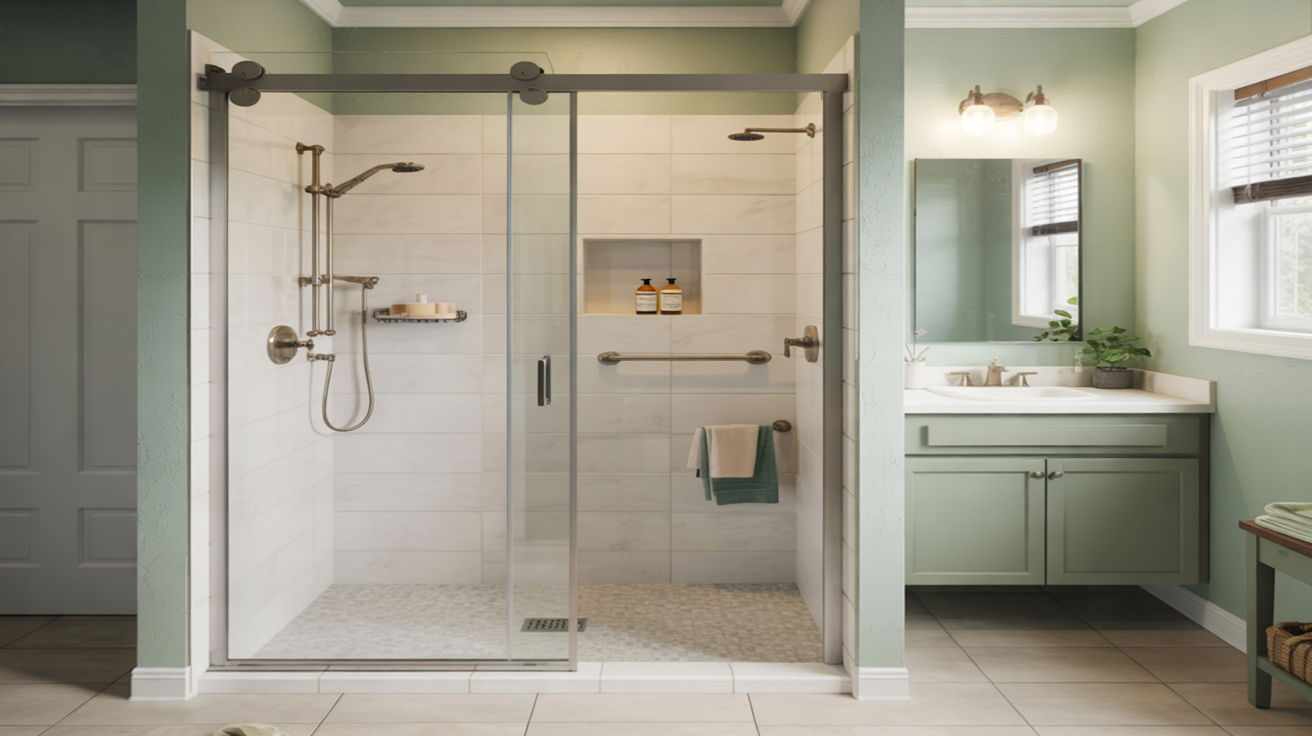
Upgrading to energy-efficient, water-saving shower fixtures is one of the easiest ways to cut your utility bills, protect Florida’s water resources, and enjoy a more comfortable shower. Whether you’re planning a full shower replacement in Palm Bay or just swapping out a showerhead, modern fixtures can make a noticeable difference in how your bathroom feels and performs.
How Efficient Shower Fixtures Save Water and Energy
Most older showerheads use 2.5 gallons of water per minute (GPM) or more. Many efficient models today use 1.5–2.0 GPM while still giving you strong, satisfying water pressure.
When you reduce water use, you also reduce the amount of hot water your water heater must produce. That means:
- Lower water bills
- Lower electric or gas bills
- Less strain on your plumbing and water heater
In a busy home, especially in a warm, growing area like Palm Bay, those savings can add up quickly over the life of your new shower.
Key Types of Water-Saving Shower Fixtures
You have several options when selecting efficient fixtures. Many homeowners choose a combination of these during a shower replacement project.
Low-Flow Showerheads
Low-flow showerheads are specifically designed to use less water while maintaining the feel of a full spray.
- Aerating models: Mix air with water to create a softer, mist-like spray. Very efficient, but can feel cooler due to air mixing.
- Non-aerating models: Use pressure and smaller openings to deliver strong streams with less water, usually warmer and more spa-like.
Look for a flow rate printed on the showerhead body or packaging. A good goal is 1.5–2.0 GPM for most homes.
Thermostatic and Pressure-Balancing Valves
Valves control the blend of hot and cold water. Efficient modern valves help you save water and improve safety.
- Thermostatic valves: Let you set an exact temperature and keep it steady. You spend less time adjusting the handle and running water while you “find” the right temperature.
- Pressure-balancing valves: Maintain consistent temperature even when someone flushes a toilet or runs a faucet elsewhere, reducing waste and risk of scalding.
Diverters and Multi-Function Controls
Modern diverters can route water between a fixed showerhead, handheld sprayer, and body sprays. Efficient setups allow:
- Use of just one outlet at a time to limit water use
- Quick shutoff while lathering without losing your temperature setting
- Targeted cleaning, which often uses less water than a full-body spray
Handheld Showerheads with Pause Features
Handheld showerheads are not only convenient; many include a built-in pause or trickle function. That makes it easy to temporarily reduce flow while you:
- Shampoo or condition your hair
- Shave
- Help kids, older family members, or pets bathe
Because the water temperature stays nearly the same, you’re not wasting water to re-adjust the mix each time.
What to Look for in Energy-Efficient Shower Fixtures
Not every “eco” label means the same thing. Here are practical details to pay attention to when you shop or talk with a shower replacement contractor.
- Flow rate (GPM): Check that the listed gallons per minute match your efficiency goals.
- Certification labels: Water-saving certifications can be a good sign of tested performance.
- Compatibility with existing plumbing: Older homes or previous DIY work may require adapter fittings or valve updates. Coordinating this with your plumbing upgrades can prevent surprises.
- Finish and material quality: Durable finishes stand up better to humidity, hard water, and frequent cleaning.
- Simple controls: Clear markings and smooth operation help everyone in the home quickly reach the right temperature without wasting water.
Best Time to Upgrade to Efficient Fixtures
You can swap out a showerhead anytime, but combining fixture upgrades with a shower replacement project often makes the most sense.
During a Full Shower Replacement
When the walls are open and the old unit is removed, it’s easier to:
- Replace outdated valves and supply lines
- Adjust showerhead height and positions
- Add diverters for handheld showers or future accessories
If you’re considering a walk-in or low-threshold shower, visit the pages on walk-in shower replacement and low-threshold and barrier-free showers to see how accessibility features pair with efficient fixtures.
As Part of a Tub-to-Shower Conversion
Switching from a tub/shower combo to a dedicated shower is the perfect time to re-think how much water you use each day. A well-designed conversion can combine:
- A low-flow fixed showerhead for everyday use
- A handheld sprayer for flexibility and quick rinsing
- An efficient valve and diverter system that keeps overall water use in check
To compare different types of projects, see tub-to-shower conversion vs full shower replacement and types of replacement showers.
Simple Daily Habits to Maximize Savings
Efficient fixtures do a lot of the work for you, but small changes in routine can increase your savings.
- Shorten showers slightly: Even a one- or two-minute reduction can have a big impact over a year.
- Use the pause feature: Pause or reduce flow while lathering, shaving, or applying conditioner.
- Fix drips quickly: A slow leak adds up to gallons wasted every day.
- Set a reasonable temperature: Extremely hot showers waste more energy and make your bathroom more humid.
Planning an Efficient Shower Remodel in Palm Bay
If you are planning a broader update to your bathroom, choosing the right fixtures is just one piece of the puzzle. Consider how efficiency fits with other design and performance choices:
- Wall and base materials: Durable, low-maintenance surfaces can reduce the need for harsh cleaners and frequent repairs. For options, see acrylic vs tile showers and mold and mildew resistant shower materials.
- Safety and accessibility: Pair efficient fixtures with non-slip flooring, grab bars, and seating. Learn more at non-slip and safety features for new showers and shower replacement for aging in place.
- Layout and space: In smaller bathrooms, the right fixture placement can help the space feel larger and more comfortable. Ideas are available in small bathroom shower replacement ideas.
For a step-by-step breakdown of the overall process, the shower replacement checklist and timeline and planning worksheet are useful resources as you plan your project.
FAQs About Energy-Efficient and Water-Saving Shower Fixtures
Will a low-flow showerhead feel weak?
Quality low-flow showerheads are engineered to maintain good pressure with less water. The spray will feel different from an older high-flow head, but most homeowners adjust quickly and are satisfied with the performance.
Can I just replace the showerhead, or do I need new plumbing?
In many cases, you can simply swap the showerhead yourself. However, if you have very old plumbing, inconsistent temperatures, or are already planning a remodel, it’s often worth updating the valve and supply lines at the same time. The page on plumbing upgrades during shower replacement explains what to consider.
Do efficient fixtures cost more?
Some efficient models are slightly more expensive up front than basic fixtures, but the difference is usually modest. Over time, savings on water and energy bills typically offset the initial cost difference, especially in busy households.
How do I keep fixtures working efficiently over time?
Mineral buildup can reduce performance. Regular gentle cleaning and occasional descaling will help. For more maintenance tips that apply to the entire shower, visit post-installation care and cleaning for new showers.
Where can I learn more about planning a shower replacement?
You can explore additional topics on the blog, get cost insights from the shower replacement cost guide, or read common questions at shower replacement FAQs. When you are ready to discuss your project in Palm Bay, you can reach out through the site’s contact options.