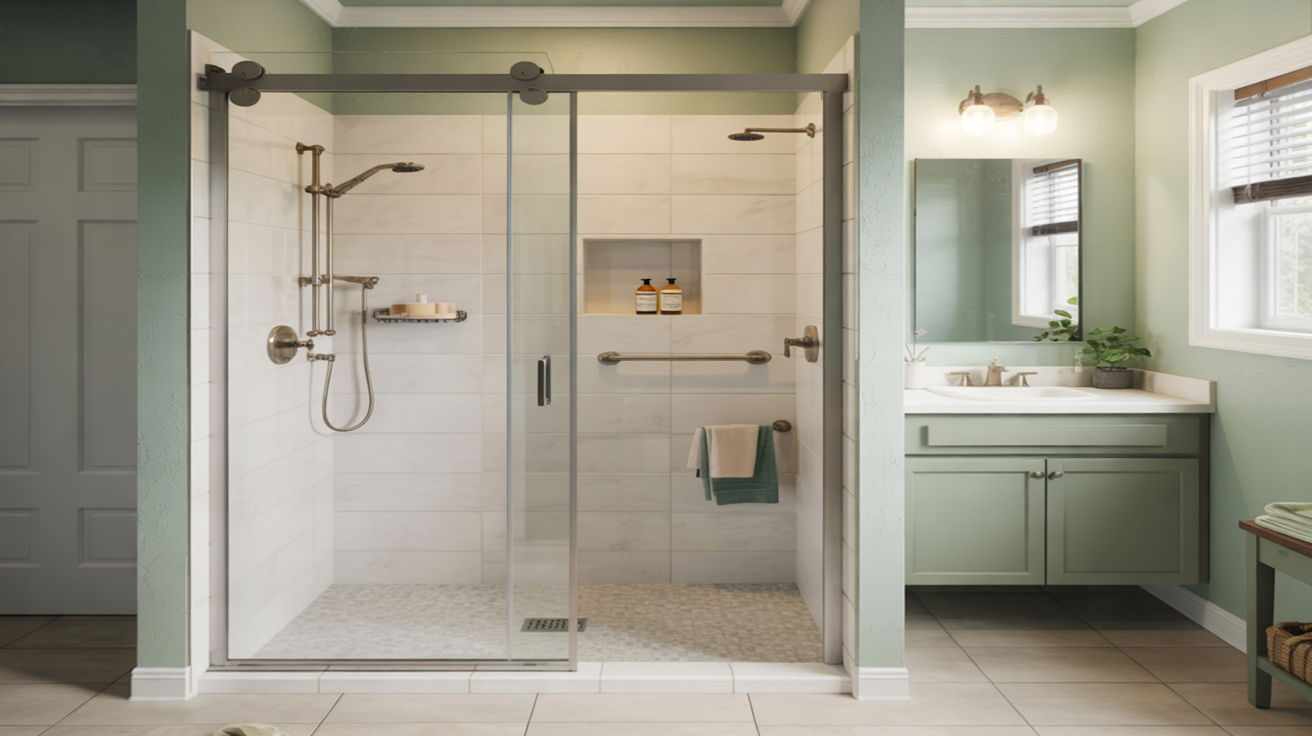
Mold and mildew can turn a beautiful new shower into an unhealthy, hard-to-clean eyesore—especially in a warm, humid climate like Palm Bay, FL. Choosing the right shower materials from the start is one of the best ways to prevent stubborn stains, musty odors, and potential health issues.
This page explains which shower materials resist mold and mildew, how they compare, and what to ask your installer before your shower replacement project.
What Makes a Shower Material Mold-Resistant?
Mold and mildew thrive where three conditions are present: moisture, warmth, and a food source (soap scum, body oils, dust). Since bathrooms are naturally warm and wet, the material itself should limit how easily mold can grow.
Key Features to Look For
- Non-porous surface: Materials that do not absorb water make it harder for mold to penetrate and take hold.
- Minimal seams and grout lines: Fewer joints mean fewer places for moisture and soap scum to collect.
- Integrated antimicrobial properties: Some products include mold- and mildew-resistant additives in the material or finish.
- Easy to clean: Smooth, low-maintenance surfaces help you remove soap scum before it becomes a mold problem.
- Proper installation and waterproofing: Even the best material can fail if water gets behind the walls or under the pan.
Most Mold-Resistant Shower Wall Materials
When planning a shower replacement in Palm Bay, certain wall materials provide better mold and mildew resistance than others.
Acrylic Shower Walls
Acrylic is one of the most popular options for mold-resistant showers.
- Non-porous: Water and soap sit on the surface and wipe away easily.
- Few seams: Systems often use large panels, reducing joints where mold can grow.
- Low maintenance: No grout to scrub or reseal.
- Good for humid climates: Performs well in areas like Palm Bay with frequent humidity.
To understand how acrylic compares to tile in more detail, you can review Acrylic vs Tile Showers: Which Is Best for Your Bathroom?.
Solid-Surface (Composite) Panels
Solid-surface panels are made from a blend of resins and minerals. They are dense, heavy-duty, and designed to mimic natural stone.
- Extremely low porosity: Blocks water absorption better than many natural stones.
- Seamless appearance: Often installed in large sections with minimal joints.
- Durable finish: Resists staining from mold, mildew, and hard water better than grout and some tiles.
High-Quality Fiberglass Surrounds
Modern fiberglass surrounds can be more mold-resistant than older fiberglass units, especially when properly finished and installed.
- Gelcoat finish: Provides a non-porous surface when maintained correctly.
- Integrated design: Many units combine walls and base, reducing seams.
- Budget-friendly: Typically more affordable than tile or solid surface.
However, lower-end fiberglass can scratch more easily, and scratches may collect soap residue and mildew, so care and cleaning are important.
Large-Format Porcelain or Ceramic Tile
Tile itself does not usually encourage mold growth, but the grout lines can. Choosing tile carefully can reduce this issue.
- Choose large tiles: Bigger tiles mean fewer grout joints.
- Use porcelain over standard ceramic when possible: Porcelain is typically denser and less porous.
- Pair with mold-resistant grout: Epoxy grout or grout with mold inhibitors helps reduce mildew stains.
Tile showers can look beautiful and last for years, but they require more maintenance to keep grout clean.
Mold-Resistant Shower Base (Pan) Options
The base of your shower collects water on every use, so choosing a mold-resistant pan is just as important as the walls.
Acrylic Shower Bases
- Non-porous and smooth: Helps prevent mold from clinging to the surface.
- Integrated slopes: Proper drainage keeps water from pooling.
- Pairs well with acrylic or solid-surface walls: Creates a cohesive, low-maintenance system.
Solid-Surface or Cultured Stone Bases
- Dense construction: Resists water absorption better than standard tile over mortar.
- Custom sizing: Can be trimmed or ordered to fit unique layouts.
- Slip-resistant textures available: Many designs add traction without harboring mildew.
Tiled Shower Floors
Tiled shower floors are attractive but require careful planning for mold prevention.
- More grout lines: Each grout joint is a potential spot for mildew.
- Proper slope and waterproofing are critical: Any ponding water or leaks can lead to mold under the tile.
- Epoxy grout is strongly recommended: It resists moisture much better than standard cement-based grout.
How Installation Affects Mold and Mildew
Material choice is only half the battle. Poor installation can trap moisture behind walls and under the pan, leading to hidden mold even when surfaces look clean.
Waterproofing Behind the Walls
- Backer boards and membranes: Cement board, foam backer, or waterproof membranes should be installed correctly behind tile systems.
- Sealed seams and penetrations: Fixtures, niches, and corners should be fully sealed to prevent leaks.
For a deeper look at how professionals control moisture in new showers, see Waterproofing and Leak Prevention in Shower Replacement.
Drainage and Ventilation
- Proper slope: The base should direct water efficiently to the drain without puddles.
- Upgraded fixtures: Modern valves and showerheads can improve water control. Learn more at Plumbing Upgrades to Consider During Shower Replacement.
- Bathroom ventilation: A good exhaust fan and sometimes a window help remove humidity after showers.
Simple Habits to Keep a Mold-Resistant Shower Clean
Even with the best materials, a few easy habits go a long way in keeping mold away.
- Rinse surfaces after showering: Quickly spray down walls and the base to remove soap residue.
- Dry what you can: Use a squeegee or towel on walls and glass doors to limit water spots and mildew.
- Run the exhaust fan: Let it run for 15–20 minutes after each shower to clear humid air.
- Use mild, non-abrasive cleaners: Follow the manufacturer’s cleaning recommendations to avoid damaging finishes.
- Check caulk and seals regularly: Replace any cracked or peeling caulk before water can get behind it.
For more on maintaining a new shower, you can visit Post-Installation Care and Cleaning for New Showers.
Comparing Mold-Resistant Shower Materials
| Material | Mold Resistance | Maintenance Level | Typical Look |
|---|---|---|---|
| Acrylic Panels & Base | Excellent (non-porous, few seams) | Low | Clean, modern, simple patterns |
| Solid-Surface Panels & Base | Excellent (very low porosity) | Low to moderate | Stone-like, upscale |
| Fiberglass Surround | Good (if high-quality and well-maintained) | Low | Basic to mid-range |
| Large-Format Tile with Epoxy Grout | Good (tile is resistant; grout must be maintained) | Moderate | Classic or custom decorative |
| Small Tile with Standard Grout | Fair (many grout lines, more upkeep) | High | Highly detailed, traditional |
FAQs About Mold-Resistant Shower Materials
Can any shower be completely mold-proof?
No material can guarantee a 100% mold-proof shower, but non-porous surfaces, quality waterproofing, and good ventilation can make mold growth much less likely and easier to control.
Is tile a bad choice in a humid place like Palm Bay?
Tile is not a bad choice, but it does require more attention. If you prefer tile, choose larger tiles, use mold-resistant or epoxy grout, and follow a consistent cleaning routine.
Do I need special cleaners for mold-resistant materials?
Most acrylic, solid-surface, and fiberglass systems only need mild, non-abrasive cleaners. Avoid harsh chemicals or abrasive pads that can scratch surfaces, since scratches may collect residue.
How do I know which materials are right for my bathroom?
The best choice depends on your budget, style preferences, and how much maintenance you are willing to do. A professional installer can walk you through options such as acrylic systems, solid-surface panels, or tile and help you balance appearance, cost, and upkeep. To learn more about working with an installer, see Hiring a Shower Replacement Contractor: Questions to Ask.
When is it better to replace the shower instead of trying to clean existing mold?
If mold keeps returning, is spreading behind caulk or grout, or you suspect water is getting behind the walls or under the base, a full shower replacement with updated, mold-resistant materials and proper waterproofing may be the safest, most long-term solution.