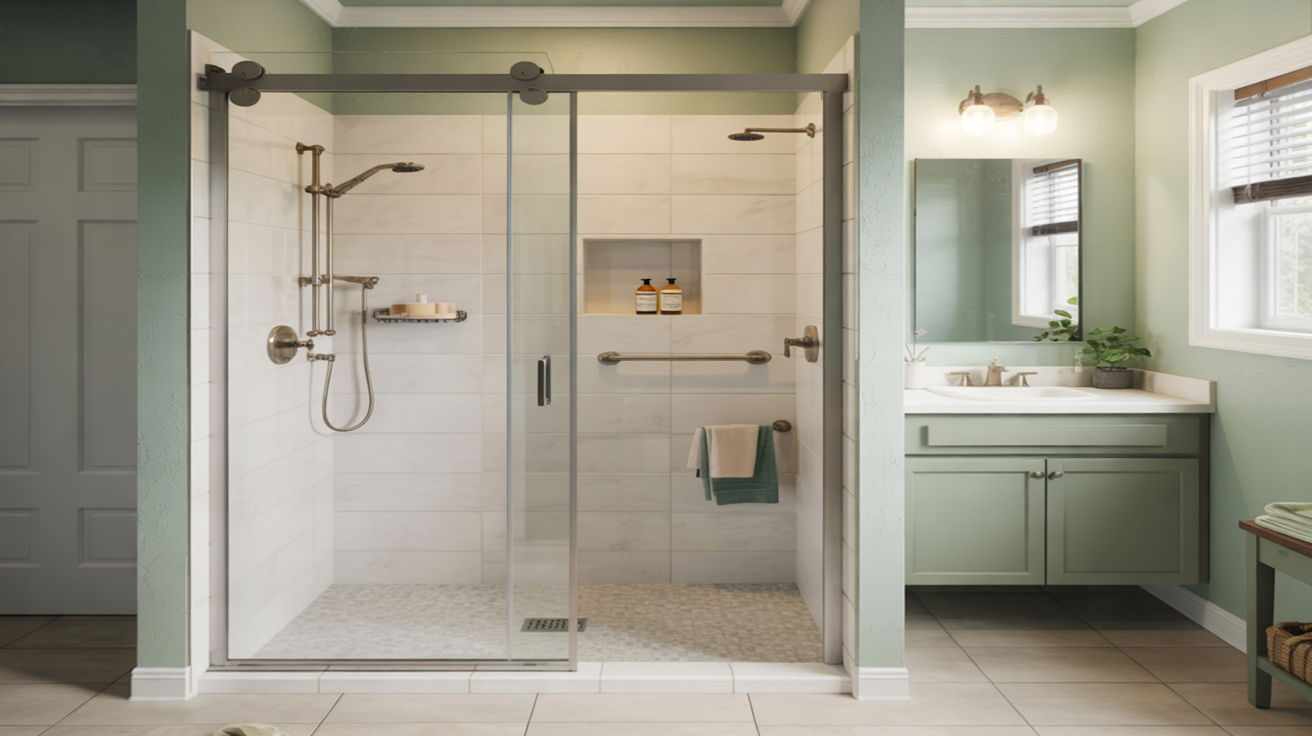
Deciding between a tub-to-shower conversion and a full shower replacement can be confusing. Both can refresh your bathroom, but they solve different problems, involve different levels of construction, and come with different costs and timelines. This guide breaks down how each option works and how to choose the right fit for your Palm Bay home.
What Is a Tub-to-Shower Conversion?
A tub-to-shower conversion removes an existing bathtub and installs a shower in the same footprint. It is ideal if you rarely use the tub and want easier, safer access and a more open feel.
Typical steps involved
- Remove the old tub, surround, and fixtures
- Inspect and adjust plumbing for a shower valve, drain, and showerhead height
- Install a low-threshold or walk-in shower base where the tub was
- Add wall surrounds (acrylic, fiberglass, or tile)
- Finish with doors or a curtain, plus shelving, grab bars, and accessories
Because the new shower stays within the tub’s footprint, a conversion is often faster and less invasive than reconfiguring the whole bathroom.
What Is a Full Shower Replacement?
A full shower replacement removes your existing shower and installs a new one in the same or a modified location. This is best when your current shower is old, leaking, damaged, or simply doesn’t match your style or needs anymore.
Typical steps involved
- Demolish the existing shower base, doors, and wall surfaces
- Inspect framing and subfloor for water damage or mold
- Upgrade waterproofing and, if needed, adjust plumbing and drain locations
- Install a new shower base or pan and wall system
- Add doors, fixtures, storage, and trim
A full replacement can be a one-for-one swap, or it can be part of a bigger layout change if you are remodeling the entire bathroom.
Key Differences: Tub-to-Shower Conversion vs Full Shower Replacement
Both projects can modernize your bathroom, but they target different goals. Use the comparison below to clarify which option fits you better.
| Factor | Tub-to-Shower Conversion | Full Shower Replacement |
|---|---|---|
| Main purpose | Replace a tub with a walk-in shower | Update or rebuild an existing shower |
| Typical location | Standard alcove bathtub area | Current shower area, may adjust size or shape |
| Accessibility gains | Major improvement; no high tub wall to step over | Moderate to major, depending on new base design |
| Impact on resale | Increases appeal if another tub remains in the home | Improves appeal by updating a worn or dated shower |
| Scope of work | Focus on one alcove; plumbing usually stays close to existing | Can range from simple swap to full rebuild with framing and plumbing changes |
| Best for | Homeowners who don’t use the tub and want a walk-in shower | Homeowners with a leaking, damaged, or outdated shower |
When a Tub-to-Shower Conversion Makes More Sense
Consider a tub-to-shower conversion if you want to change how your bathroom functions, especially around accessibility and daily use.
Good situations for a conversion
- You almost never take baths. If your tub is mostly used as a shower already, converting it gives you more comfort and space.
- You want safer, easier entry. A low-threshold shower is easier to step into than a tall tub wall, which can be important for aging in place or mobility concerns.
- You have at least one other tub in the home. Many buyers like having at least one tub, so keeping one elsewhere can protect resale value.
- Your bathroom feels cramped. A clear glass shower door and wider shower floor where the tub was can make a small bathroom feel more open.
If you are exploring accessibility options, see how conversions relate to low-threshold and barrier-free showers and shower replacement for aging in place.
When a Full Shower Replacement Is the Better Choice
Choose a full shower replacement if the shower you already have is the main issue, not the tub.
Good situations for a full replacement
- Your shower is leaking or showing mold. Water damage behind the walls or pan usually calls for a complete tear-out and rebuild.
- The layout works, but the finishes are dated. Replacing the base, walls, and doors updates the look without changing the rest of the bathroom.
- You want upgraded waterproofing. A new system gives you better leak prevention and peace of mind. Learn more in our guide to waterproofing and leak prevention.
- You’re adding luxury features. A full replacement is the time to add niches, benches, and high-end fixtures. Explore ideas in luxury shower upgrades.
Design Options for Both Projects
Whether you convert a tub or replace a shower, many design choices overlap.
Walls and bases
You can choose from acrylic systems, tile, or a combination. Each has its own look, maintenance level, and cost. For a detailed breakdown, see acrylic vs tile showers.
Doors vs curtains
Frameless glass doors give a sleek, open feel, while curtains are flexible and budget-friendly. Compare the options in shower doors vs shower curtains.
Safety and convenience features
- Non-slip flooring and textured bases (non-slip safety features)
- Grab bars and corner or recessed shelves
- Benches and footrests for shaving or stability
- Water-saving showerheads and valves (water-saving fixtures)
Practical Steps to Decide What You Need
Use this simple process to narrow down your choice between a tub-to-shower conversion and a full shower replacement.
- List how your household actually uses the bathroom. Baths vs showers, accessibility needs, kids or guests, etc.
- Check the condition of your existing tub and shower. Look for cracking, staining, loose tiles, soft spots, or recurring mildew.
- Consider future plans. If you plan to stay in your home long term, a low-threshold shower may be more important than keeping an extra tub.
- Set a realistic budget and timeline. Our shower replacement cost guide and timeline and planning worksheet can help.
- Talk with a professional. An installer can inspect your plumbing and structure and explain what’s practical in your specific bathroom.
If you are weighing DIY versus hiring help, review DIY vs professional shower replacement and questions to ask a contractor.
Common Questions About Conversions and Replacements
Will removing a tub hurt my home’s value?
If your Palm Bay home has at least one other bathtub, converting a rarely used tub to a shower usually does not hurt resale value and may improve it for buyers who prefer walk-in showers.
Which is usually faster: a tub-to-shower conversion or a full replacement?
A straightforward tub-to-shower conversion is often comparable in time to a one-for-one shower replacement. More complex replacements that involve moving plumbing or repairing damage can take longer. For typical timelines, see how long a shower replacement takes and one-day shower replacement.
How much disruption should I expect?
Both projects involve noise, dust, and limited bathroom use during installation. Proper planning and prep, such as clearing the space and protecting nearby areas, can reduce stress. Our guide on preparing your bathroom for a shower replacement walks you through those steps.
Can financing help with a larger project?
Financing can make it easier to choose the project that truly fits your needs instead of only what fits short-term cash. Learn more in affordable shower remodel financing options and the related financing FAQs.
How do I protect my new shower long-term?
Whichever route you choose, good materials, solid installation, and regular maintenance matter. Read about mold and mildew-resistant materials, shower replacement warranties, and post-installation care and cleaning to keep your shower looking new.
Next Steps for Your Palm Bay Bathroom
Choosing between a tub-to-shower conversion and a full shower replacement comes down to how you use your bathroom, the condition of your current fixtures, and your long-term plans for your home. Explore more ideas in our blog, or review different types of replacement showers and custom shower designs to clarify what will work best in your space.