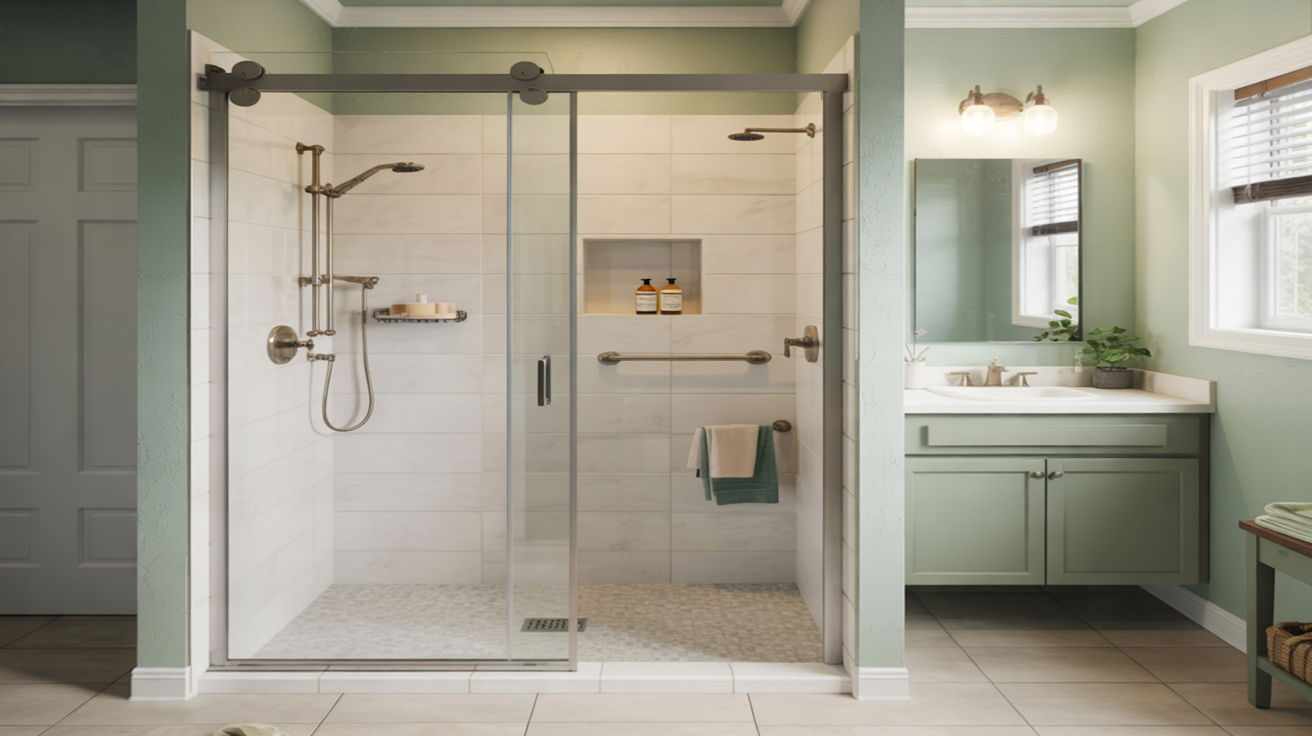
Why Shower Replacement Problems Happen
Shower replacement is one of the most impactful bathroom upgrades you can make, but it also combines plumbing, waterproofing, and finish work in a small space. That mix means there are many places where things can go wrong if the project is rushed or poorly planned.
In Palm Bay, FL, we also have to think about humidity, slab foundations, and older plumbing that may not meet current codes. Understanding common issues before you begin helps you ask better questions, choose the right materials, and avoid expensive do-overs.
Common Design and Planning Mistakes
1. Choosing the Wrong Size or Layout
One of the first mistakes homeowners make is ordering a shower base or enclosure that doesn’t quite fit the space or the existing plumbing. Even an inch off can cause alignment issues with drains, walls, and doors.
How to avoid it:
- Take precise measurements of length, width, height, and ceiling clearances.
- Confirm drain location and type (center, offset, linear) before purchasing a base.
- Consider door swing and space for entering/exiting, especially in smaller bathrooms.
- Review layout options with a professional or use a detailed shower planning checklist. You can find more planning help in the Step-by-Step Shower Replacement Checklist for Homeowners.
2. Overlooking Accessibility and Future Needs
Another planning error is focusing only on how the shower looks today and not how it will function as you age or if your mobility changes.
How to avoid it:
- Think about low-threshold or barrier-free designs for easier entry.
- Plan for secure blocking inside the walls where grab bars could be added later.
- Choose non-slip flooring and comfortable entry widths from the start. For more ideas, see Low-Threshold and Barrier-Free Showers for Accessibility and Non-Slip and Safety Features for New Showers.
3. Ignoring Ventilation and Moisture Control
Even a perfectly waterproofed shower can create moisture problems in the rest of the bathroom if steam has nowhere to go. That can lead to peeling paint, mildew, and damaged drywall.
How to avoid it:
- Verify that your bathroom fan vents to the exterior, not into the attic.
- Upgrade to a properly sized fan if your current one is underpowered.
- Use mildew-resistant paint and caulk in surrounding areas.
Installation Problems That Cause Leaks
4. Inadequate Waterproofing Behind Walls
One of the most serious issues is hidden water damage caused by missing or poorly installed waterproofing membranes. Water can seep behind tile or panels for months before you notice soft walls or flooring.
How to avoid it:
- Use a continuous waterproof backing or membrane in the entire shower area, not just around the fixtures.
- Follow manufacturer instructions for overlaps, seams, and corners.
- Ask your installer to explain their waterproofing system in detail. You can learn more about proper methods in Waterproofing and Leak Prevention in Shower Replacement.
5. Poor Drain and Slope Setup
If the shower floor does not slope correctly toward the drain, water will pool along the edges or near the entrance. Over time, that can damage grout, caulk, and the bathroom floor outside the shower.
How to avoid it:
- Make sure the shower base or tile pan is installed level side-to-side but properly sloped toward the drain.
- Test drainage with several gallons of water before closing up or finishing the walls.
- Confirm that the drain assembly is compatible with your plumbing and is sealed correctly.
6. Gaps in Caulk and Seals
Even small gaps in caulk around corners, doors, and seams can let water in where it shouldn’t go, especially in a busy family bathroom.
How to avoid it:
- Use high-quality, mold-resistant bathroom caulk.
- Seal all vertical and horizontal joints where different materials meet.
- Inspect the caulk line before using the shower and allow full curing time.
- Plan for routine caulk inspections as part of ongoing maintenance. For more care tips, visit Post-Installation Care and Cleaning for New Showers.
Material and Product Issues
7. Using the Wrong Materials for a Wet Area
Standard drywall, non-rated backer board, or low-quality grout and adhesive often fail in wet environments. In our humid Palm Bay climate, that failure can happen even faster.
How to avoid it:
- Use cement board or approved backer products specifically made for showers.
- Choose thinset and grout or adhesives designed for wet areas.
- Consider mold- and mildew-resistant wall systems to reduce long-term maintenance. Learn more at Mold and Mildew Resistant Shower Materials.
8. Choosing the Wrong Surface for Your Lifestyle
A material that looks great in a showroom may not fit your cleaning routine or long-term plans. For example, heavy grout lines can be harder to maintain than smooth surfaces.
How to avoid it:
- Compare acrylic, solid surface, and tile based on cleaning, durability, and appearance.
- Be realistic about how much time you want to spend scrubbing grout.
- Balance style with practicality and safety. For a breakdown of options, visit Acrylic vs Tile Showers: Which Is Best for Your Bathroom?.
Plumbing and Fixture Challenges
9. Reusing Old or Failing Plumbing
Replacing the visible parts of the shower without addressing aging valves, corroded lines, or outdated connections can lead to leaks inside the wall later.
How to avoid it:
- Have the existing plumbing inspected while the walls are open.
- Consider upgrading valves, supply lines, and shutoff connections during the project.
- Use code-compliant, modern fixtures that match your new design. See more upgrade ideas in Plumbing Upgrades to Consider During Shower Replacement.
10. Incorrect Fixture Height and Placement
Shower heads that are too low, controls that are hard to reach, or niches placed in awkward spots can make daily use frustrating.
How to avoid it:
- Measure the heights of all regular users and plan control and shower head placement accordingly.
- Mark niche and grab bar locations on the wall before rough-in.
- Think about where water will spray and how easy it will be to reach controls without getting soaked.
Scheduling, Budget, and Contractor Issues
11. Underestimating Time and Disruption
Many homeowners assume a shower replacement is always a one-day project, but unexpected plumbing or structural issues can extend the schedule.
How to avoid it:
- Discuss a realistic timeline with your contractor, including possible delays.
- Plan for alternative bathing options while the shower is out of service.
- Review How Long Does a Shower Replacement Take? and the Shower Replacement Timeline and Planning Worksheet for more detail.
12. Hiring the Wrong Installer
Even high-quality materials can fail if installed incorrectly. Poor communication and unclear contracts are another source of stress and surprise costs.
How to avoid it:
- Ask detailed questions about experience, methods, and warranties. The guide Hiring a Shower Replacement Contractor: Questions to Ask can help.
- Get a written scope of work that covers demolition, waterproofing, plumbing, and finishes.
- Verify what is and is not covered under any warranties by reviewing Shower Replacement Warranties and What They Really Cover.
Frequently Asked Questions About Shower Replacement Problems
How do I know if my current shower has hidden problems?
Warning signs include soft or spongy walls, loose tiles, musty odors, cracked grout, or stains on ceilings below the bathroom. During a replacement, a careful inspection behind the old walls and under the base is the best way to uncover any existing water damage or plumbing issues.
Is a DIY shower replacement a bad idea?
DIY can work for some homeowners with construction experience, but mistakes with waterproofing or plumbing can be expensive to fix later. Compare the risks and benefits using the guide DIY vs Professional Shower Replacement before deciding.
What if my budget is tight but I want to avoid problems?
It often makes sense to prioritize quality waterproofing and plumbing over cosmetic upgrades. You can choose simpler finishes now and upgrade fixtures later. If cost is a concern, explore Affordable Shower Remodel Financing Options and the Shower Replacement Cost Guide.
Where can I learn more before starting my project?
The site includes many focused resources, including Shower Replacement FAQs, Types of Replacement Showers: Walk-In, Tub-to-Shower, and More, and Blog articles that cover planning, design, and maintenance in detail.
Set Your Shower Project Up for Success
Most common shower replacement problems can be avoided with careful planning, the right materials, and skilled installation. By understanding where projects typically go wrong, you can ask informed questions, set realistic expectations, and protect your home from leaks and costly repairs.
When you are ready to move forward with a shower replacement in Palm Bay, FL, you can learn more about the company, process, and service area on the About and Contact pages, or request quotes through the Get Started page.